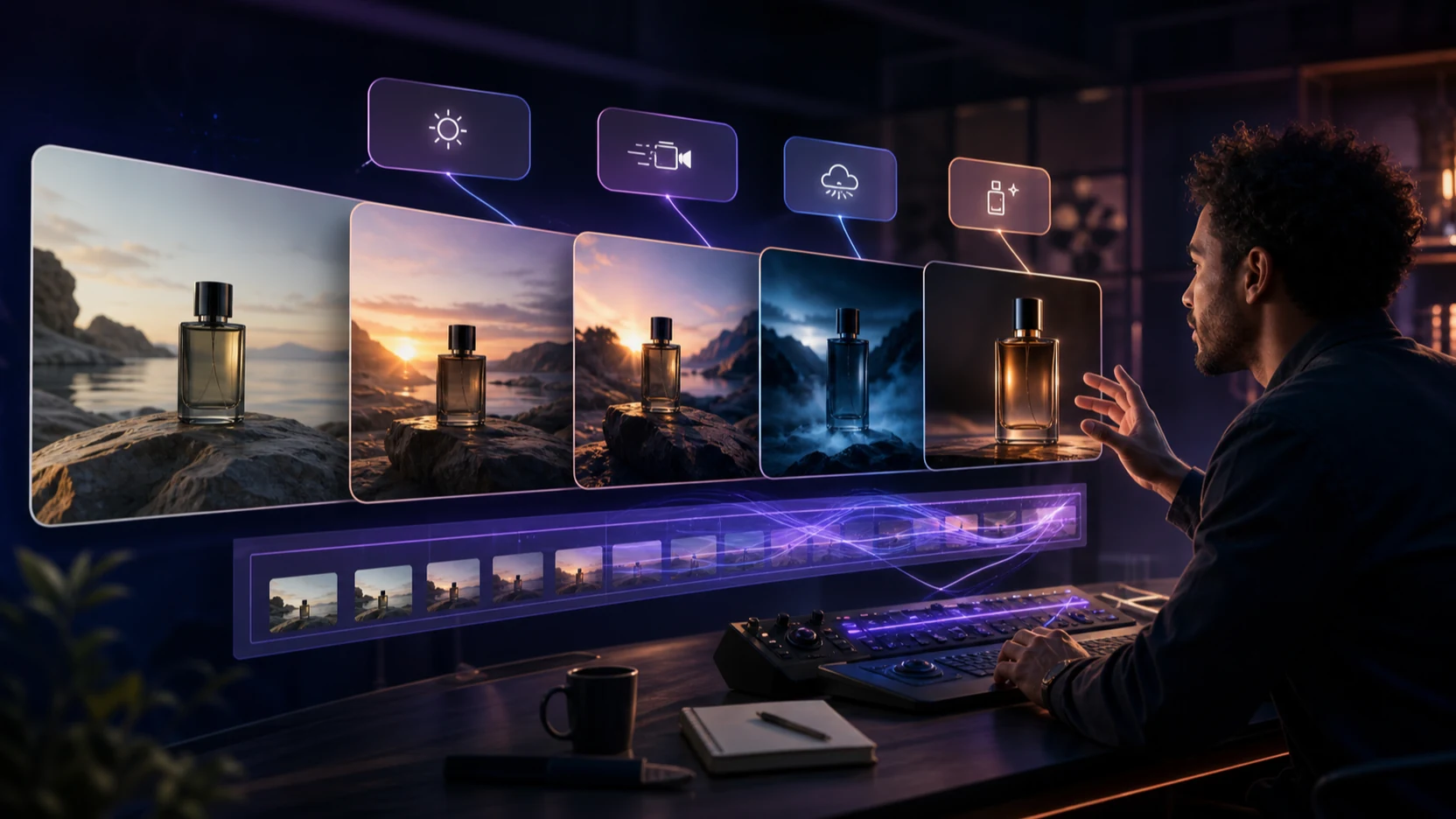
The generative-AI landscape keeps accelerating. As creators demand faster turnaround for images and videos, infrastructure, model quality, and cost matter more than ever. One entrant positioning itself to lead the speed race is WaveSpeedAI. This review examines what it offers, how it performs, how it compares to other platforms—ending with an alternative for users who prioritize different trade-offs.
What Is WaveSpeedAI?
WaveSpeedAI describes itself as a “high-performance AI image and video generation service platform.” It claims image generation in under 2 seconds and video generation in under 2 minutes through optimized inference systems.
The platform emphasizes three core value propositions: Fast, Vast, Efficient—promising speed, broad model access, and high value.
WaveSpeedAI targets both creators (artists, designers, content producers) and developers/enterprises that need scalable API-based AI media generation.
In short: WaveSpeedAI is not just an “AI image generator”—it is a multi-model, multimodal media generation infrastructure built for speed and scale.
Key Features of WaveSpeedAI
⚡ High-Speed Image Generation
WaveSpeedAI supports FLUX image models (e.g., FLUX-dev) and claims generation in under 2 seconds.
This is particularly useful for rapid concepting, bulk creation, and iterative workflows.
🎥 Video Generation & Motion Tools
The platform supports text-to-video and image-to-video using models such as WAN-2.2, WAN-2.1, Veo 3.1, and others.
Video generation in under 2 minutes is notably fast for 2025, though final quality will depend on model choice and settings.
🧠 Multi-Model Access & API Integration
WaveSpeedAI integrates multiple top-tier model families for image and video generation—including FLUX, WAN, Seedream, and Ideogram—accessible via a RESTful API for automated workflows.
This allows creators and developers to choose the right tool for each content type rather than rely on a single model.
💳 Credit-Based Pricing & Usage Metrics
WaveSpeedAI uses a pay-as-you-go credit system rather than subscription-locked access.
Skywork reports sample pricing at ~$0.006 per image for ultra-fast FLUX-dev models.
Documentation also lists tiered throughput capabilities: e.g., Bronze (10 images/min, 5 videos/min) up to Gold (2,000 images/min, 120 videos/min).
Output Quality & Performance
⚡ Speed & Efficiency
Skywork’s tests show WaveSpeedAI significantly reducing latency compared to earlier model pipelines.
This advantage enables more iterations, faster ideation, and improved productivity—especially in volume-based content creation.
🖼️ Quality & Consistency
Several review sources acknowledge strong output quality for the speed offered:
- “The ability to generate high-quality images and videos in seconds is a game-changer.”
However, limitations are also noted:
- Occasional inconsistencies or artifacts in results, especially without refined prompting.
- Reddit discussion highlights interest but cautious evaluation of prompt adherence and pricing outcomes.
In short: speed is excellent, but users should expect to refine prompts or perform light post-editing for professional use.
🧩 Usability & Workflow
WaveSpeedAI offers both a web UI and API. Documentation includes SDKs and guides for developers.
ScoutForge notes the UI “leans more technical-user focused,” meaning non-tech creators may encounter a learning curve.
🧱 Reliability & Ecosystem
Skywork notes the current lack of a public SLA/status page—a consideration for enterprise-grade deployment.
Comparison vs Other AI Generators
| Feature | WaveSpeedAI | Competitor A (e.g., Runway) | Competitor B (Creator-First Tools) |
|---|---|---|---|
| Speed | Extremely fast (<2s images, <2m video) | Fast but slower | Prioritizes ease, not speed |
| Model Variety | High (many image + video models) | Broad, fewer families | Limited to certain niche media |
| Accessibility | Web UI + API (technical leaning) | Strong UI + API | Very easy UI, limited depth |
| Cost Model | Flexible credits, scalable | Subscription + credits | Mostly subscription |
| Best For | Iteration & volume | Production workflows | Hobby/creator use |
WaveSpeedAI stands out for speed & model flexibility, but may lack ecosystem maturity and pro-polish compared to long-established tools.
Pricing & Value for Money
Skywork’s 2025 review reports:
- ~$0.006/image for fast FLUX generation
- ~$0.10 per 5 seconds for 4K video upscaling
For many users, WaveSpeedAI offers strong value due to its speed-to-cost ratio.
However, heavy video users should calculate credit usage carefully—video costs can scale quickly.
Overall, value is excellent for rapid-iteration and batch workflows.
Pros & Cons Summary
✅ Pros
- Ultra-fast generation speeds (images <2s, video <2m)
- Access to many SOTA models (FLUX, WAN, Seedream, etc.)
- Flexible credit-based pricing (no forced subscriptions)
- Strong for bulk creation, iteration, and developer pipelines
❌ Cons
- Quality can be inconsistent; may require refinement or post-editing
- UI leans technical — less beginner-friendly than some rivals
- No public SLA/status page (enterprise consideration)
- Not ideal for cinematic, brand-safe, final-mile video
Who Should Use WaveSpeedAI?
✅ Ideal For
- Content creators and marketers producing high-volume visual content
- Game devs, indie filmmakers, and concept artists needing rapid iteration
- Developers integrating image/video generation into apps or workflows via API
❌ Less Ideal For
- Agencies or studios needing broadcast-ready cinematic video
- Teams requiring strict uptime SLAs and brand compliance
- Beginners wanting a simple creative UI with minimal complexity
💡 Tips to Maximize Value
- Start with low-credit tests to calibrate quality vs cost
- Store outputs externally (WaveSpeed deletes after 7 days)
- Use fast models for drafts, then upscale or refine once final direction is chosen
Alternative Recommendation: VideoWeb.ai
For users whose priority is cinematic quality, advanced motion coherence, and storytelling-ready video output, consider VideoWeb.ai:
Why Choose VideoWeb.ai?
- Designed for professional-grade video generation
- Better for realistic scene transitions, motion logic, and narrative content
- Produces more polished results suitable for client-facing and commercial campaigns
When to Choose Which
| Situation | Choose WaveSpeedAI | Choose VideoWeb.ai |
|---|---|---|
| Rapid ideation & multiple variants | ✅ Yes | |
| Bulk social media visuals | ✅ Yes | |
| Final client-ready cinematic video | ✅ Yes | |
| Story-driven scenes & coherent motion | ✅ Yes |
Conclusion
WaveSpeedAI brings a compelling value proposition to 2025: high speed, multi-model flexibility, and scalable pricing. It excels at rapid prototyping, bulk content, and developer-integrated workflows.
However, it is not a full replacement for professional-grade cinematic tools. Some output inconsistency, a technical-leaning UI, and limited enterprise-readiness mean creators producing final-mile video may require alternatives.
Final Verdict:
WaveSpeedAI is worth evaluating if you prioritize speed, iteration, and automation.
For polished, cinematic video suited for brand and commercial use, VideoWeb.ai is a strong complementary or alternative solution.