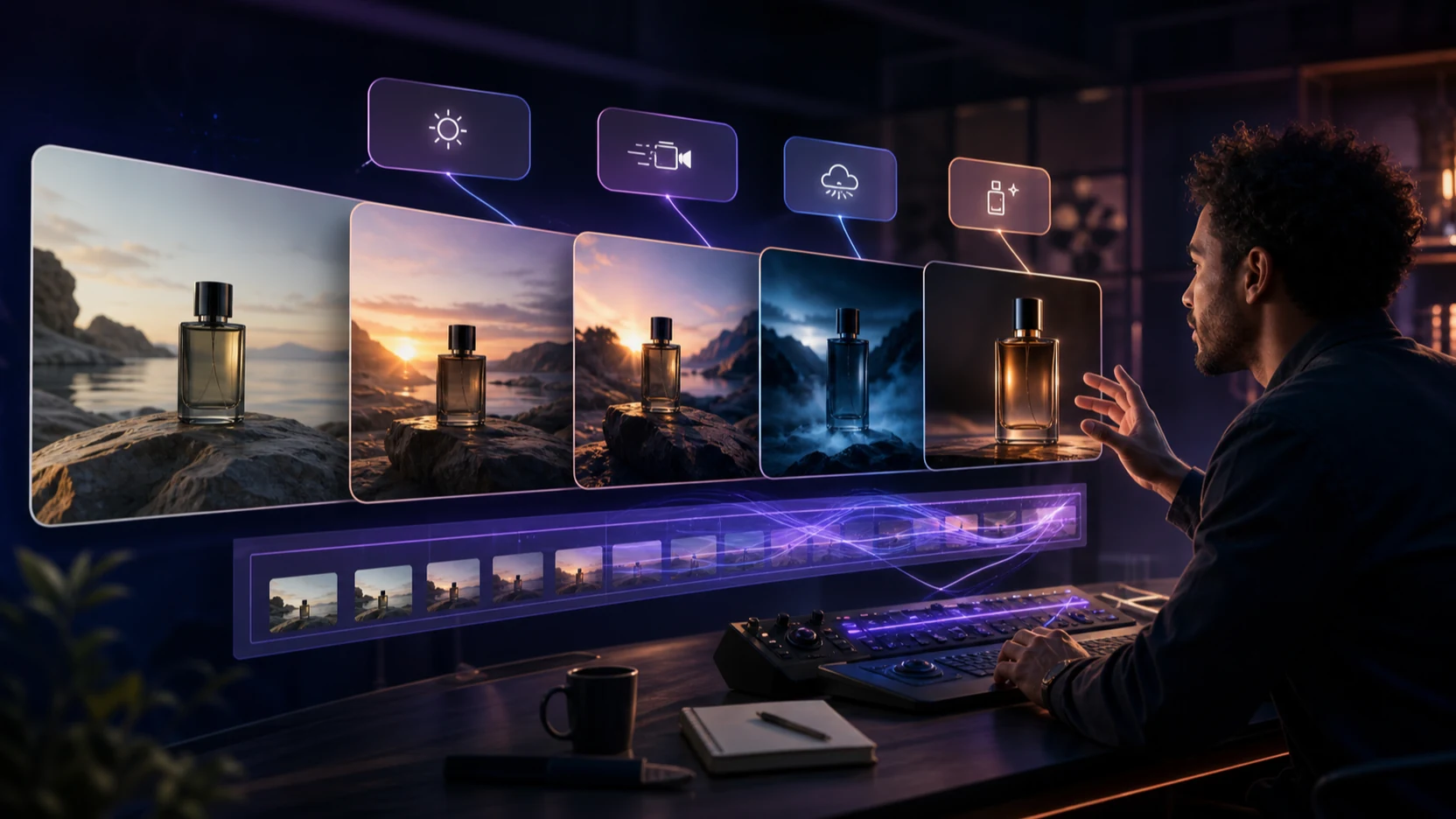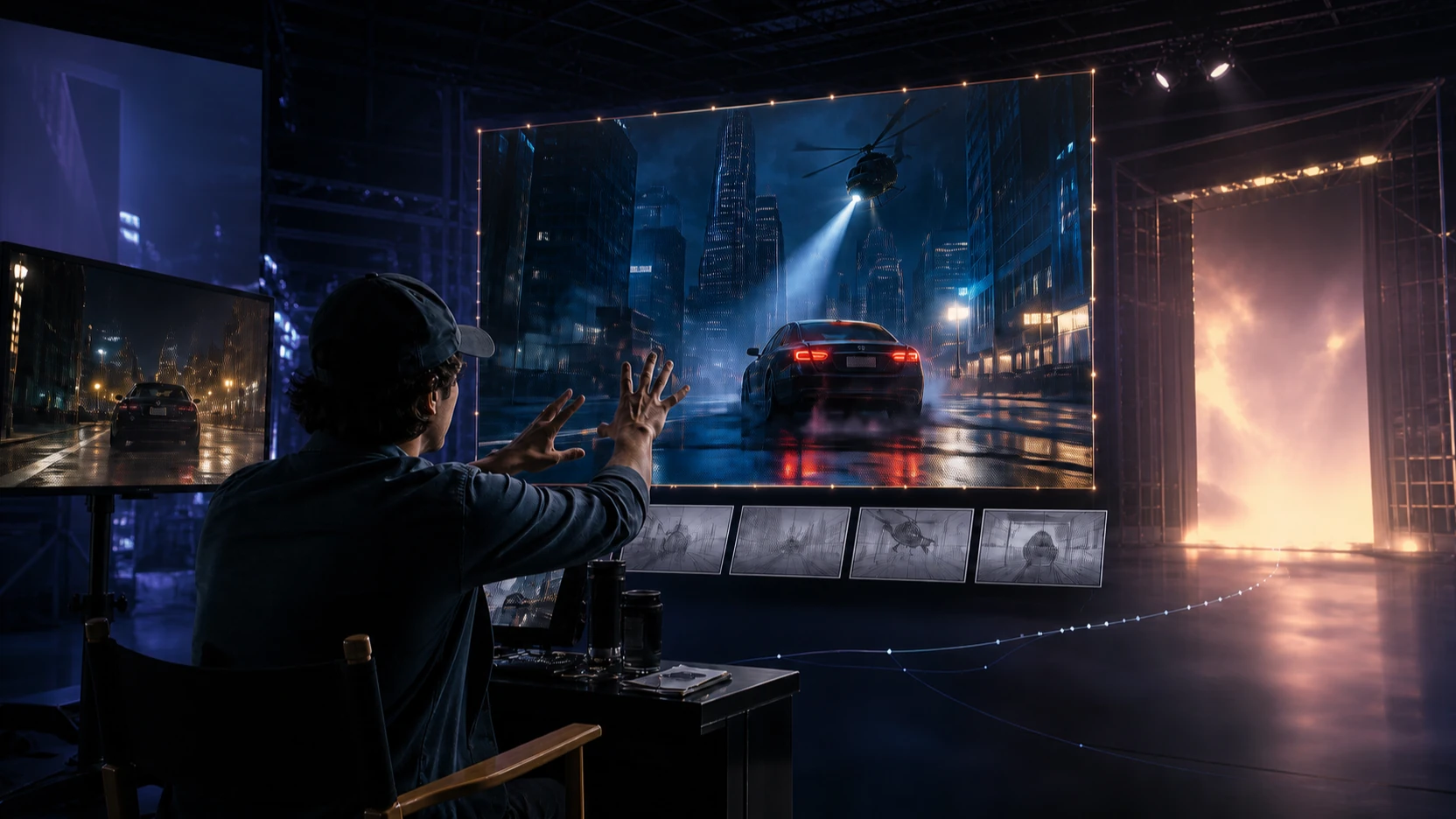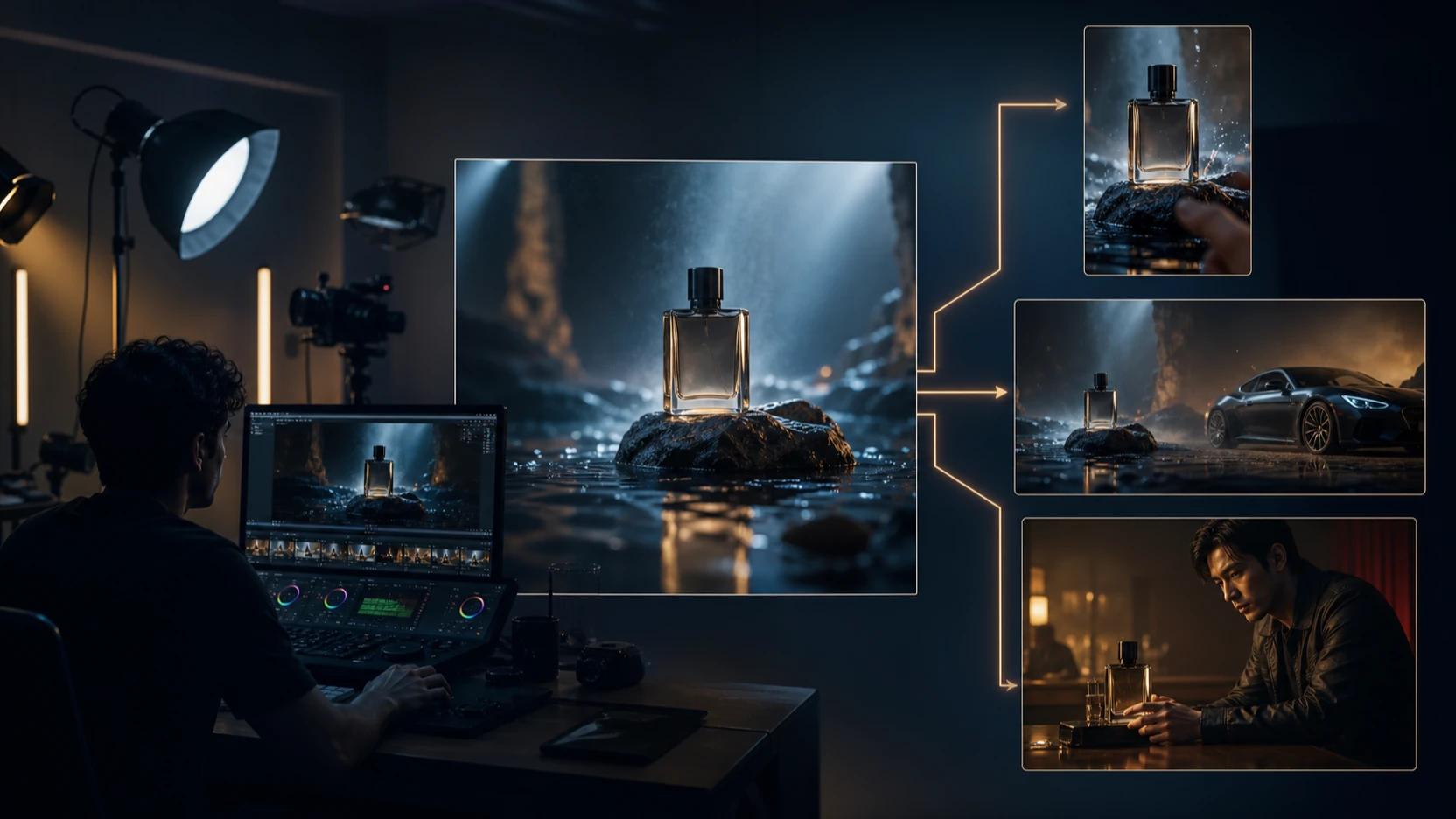
Artificial intelligence has transformed how we create and consume video. What once required cameras, crews, and editing software can now be generated from a single prompt. Among the latest innovations, two names stand above the rest: Veo 3.1 from Google DeepMind and Sora 2 from OpenAI.
Both models represent the pinnacle of AI-driven video generation — blending realism, storytelling, and motion physics in unique ways. But which performs better overall? In this article, we’ll dive deep into how Veo 3.1 AI Video Generator compares to Sora 2, analyzing their core technologies, strengths, and ideal use cases through the lens of modern creative tools like VideoWeb.ai.
🚀 The Battle of AI Video Titans
The past two years have seen a rapid evolution in AI video technology. Early tools could generate only short, silent clips. Then came advanced systems capable of synchronized audio, realistic movement, and detailed lighting.
Now, the competition is between two supermodels of generative video: Veo 3.1, built by DeepMind with cinematic storytelling in mind, and Sora 2(https://videoweb.ai/model/sora2-ai/), OpenAI’s successor to its groundbreaking first-generation model.
The veo3.1 ai video generator focuses on longer, story-driven videos with precise camera control, while Sora 2 aims for pure realism and physical authenticity. Both are available for real-world testing on VideoWeb.ai, a platform that integrates the latest AI video models in a unified workspace.
🧠 What Is Veo 3.1 AI Video Generator?
The Veo 3.1 AI Video Generator represents Google DeepMind’s most advanced text-to-video system yet. Unlike earlier models that focused on short, aesthetic scenes, Veo 3.1 was engineered for filmmakers and marketers seeking cinematic narratives that unfold smoothly over time.
Key Highlights
- Up to 60 seconds of continuous video generation
- 1080p HD resolution for professional production
- Multi-prompt storytelling, allowing creators to build multi-shot scenes
- Character and lighting consistency across transitions
- Built-in cinematic camera presets (zoom, drone, pan, dolly, etc.)
- Optimized rendering speed for faster generation on platforms like VideoWeb.ai
Where Veo 3.0 limited creators to short visual bursts, Veo 3.1 unlocks full narrative arcs, making it one of the most creative and accessible cinematic AI tools available today.
🪞 What Is Sora 2 by OpenAI?
OpenAI’s Sora 2 builds upon the legacy of the original Sora, which amazed creators with short but lifelike video generation. This second iteration refines realism, delivering physically accurate motion, natural lighting, and impeccable texture detail.
Sora 2’s strength lies in its attention to physical laws — how gravity affects a falling object, how shadows move with light, or how fabric ripples in the wind. The result is unparalleled photorealism.
Sora 2 Strengths
- Exceptional motion physics and natural lighting
- Realistic human gestures and depth-aware camera motion
- Dynamic scaling up to 2K resolution
- Fluid transitions and ambient sound generation
- Ideal for short, hyper-realistic sequences
While Sora 2’s runtime is shorter than Veo’s, it excels in frame-by-frame precision, making it the go-to model for creators prioritizing authenticity over narrative length.
⚖️ Veo 3.1 vs Sora 2: Feature Comparison
To understand their distinctions, let’s compare the two across their most important technical and creative dimensions.
| Feature | Veo 3.1 AI Video Generator | Sora 2 AI Video Model |
|---|---|---|
| Runtime | Up to 60 seconds continuous | Around 10–20 seconds |
| Resolution | 1080p HD cinematic output | Dynamic scaling (~2K) |
| Scene Control | Multi-shot & multi-prompt | Single-scene generation |
| Character Consistency | Maintains across scenes | Maintains within short clips |
| Camera Tools | Built-in presets (zoom, pan, dolly) | Manual via prompt |
| Realism | Cinematic, stylized realism | Photoreal, physics-accurate |
| Audio | Ambient & dialogue sync | Native synchronized sound |
| Speed | Faster rendering | Slower but more detailed |
| Best Use Case | Cinematic storytelling | Photoreal simulation |
The veo3.1 ai video generator stands out in multi-scene narrative creation, while Sora 2 remains unmatched in single-scene realism.
🎥 Visual Realism vs Scene Coherence
Realism is where Sora 2 shines brightest. Every detail—from hair movement to reflections—feels grounded in real physics. It’s designed to fool the eye into believing the footage was filmed by a camera.
However, realism isn’t everything. Veo 3.1 focuses on cinematic flow, ensuring visual consistency from start to finish.
Where Sora may produce photoreal snapshots, Veo crafts sequences that feel directed. The lighting adjusts between shots; the subjects maintain continuity across transitions.
On VideoWeb.ai, this difference becomes clear. Sora 2 videos look documentary-like, while Veo 3.1 videos look cinematic—each with its own artistic purpose.
🎬 Storytelling and Creative Control
This is where the veo3.1 ai video generator truly dominates. It allows creators to build full cinematic scenes through multi-prompt chaining — describing each shot, angle, and action in sequence.
Want a drone establishing shot followed by a close-up and a slow dolly zoom? Veo 3.1 handles it with ease.
Sora 2, on the other hand, is limited to single-prompt scenarios. While it generates stunningly realistic motion, it doesn’t yet support multi-shot storytelling. It’s ideal for standalone clips, not cohesive short films.
Summary
- Veo 3.1 = Director’s tool for constructing stories.
- Sora 2 = Cinematographer’s lens for capturing realism.
On VideoWeb.ai, both appeal to different creative mindsets — Veo 3.1 for storytellers, Sora 2 for perfectionists.
⚙️ Performance and Generation Speed
Rendering time plays a major role in production efficiency.
- Sora 2 uses a heavy physics simulation model that demands significant computational power, resulting in longer rendering times.
- Veo 3.1, optimized through VideoWeb.ai’s cloud acceleration, balances realism and efficiency, often producing results faster without sacrificing quality.
For creators producing content at scale — ad agencies, YouTubers, marketing teams — Veo 3.1 provides faster iteration cycles and better creative agility.
💡 Use Cases: Which One Should You Choose?
| Use Case | Veo 3.1 AI Video Generator | Sora 2 AI |
|---|---|---|
| Cinematic storytelling | ✅ Excellent | ⚪ Moderate |
| Real-world simulation | ⚪ Moderate | ✅ Excellent |
| Marketing & branding | ✅ Great for ads | ✅ Realistic product visuals |
| Education & explainers | ✅ Long narrative capability | ⚪ Limited runtime |
| Social content & reels | ✅ | ✅ |
| Film pre-visualization | ✅ | ⚪ Limited duration |
Verdict
- Choose Veo 3.1 for narrative-driven, cinematic, or instructional content.
- Choose Sora 2 for highly realistic short clips, product demos, and photoreal b-roll.
🌐 Integration with VideoWeb.ai
One of the biggest advantages for creators is that both models — Veo 3.1 and Sora 2 — are accessible via VideoWeb.ai.
VideoWeb provides a seamless interface for:
- Running both models side-by-side with the same prompt.
- Adjusting parameters like duration, resolution, and camera control.
- Previewing and downloading generated scenes instantly.
- Mixing outputs — for example, combining Sora 2’s realism with Veo 3.1’s cinematic transitions.
Creators on VideoWeb.ai can compare outputs not only by visual quality but also by efficiency and prompt responsiveness — something that’s hard to evaluate in isolation elsewhere.
🎨 Realism vs Creativity: The Philosophical Divide
AI video generation isn’t just a technical debate; it’s an artistic one.
Sora 2 aims to replicate reality — it’s about accuracy, precision, and believability. Watching a Sora clip feels like watching real footage shot on a film set.
Veo 3.1, however, interprets reality. It offers a cinematic aesthetic, sometimes stylized, sometimes hyperreal — but always intentional. It’s a tool for directors who want emotion and composition over physics.
This creative divergence defines their identities:
- Sora 2 = Realism for perfectionists.
- Veo 3.1 = Storytelling for visionaries.
🧩 The Role of Duration in Creative Freedom
The difference in duration — Veo’s 60 seconds vs Sora’s 20 — may seem small but has huge implications.
Veo 3.1’s longer generation window allows creators to:
- Introduce scenes gradually.
- Build narrative arcs.
- Add transitions that mirror cinematic rhythm.
Sora 2’s short runtime makes it ideal for isolated moments — quick shots, reactions, and dynamic motion scenes.
In the context of VideoWeb.ai, Veo 3.1’s extended length enables creators to construct entire short films directly within the platform.
🖥️ Technical Performance and Usability
Both models push hardware boundaries, but Veo 3.1’s architecture is designed for broader accessibility.
On VideoWeb.ai, the veo3.1 ai video generator uses optimized GPU rendering and batch queuing to reduce latency.
Sora 2, by contrast, demands more processing time and memory — suitable for professional-grade renders but slower in high-volume workflows.
Ease of Use
- Veo 3.1 integrates cinematic presets and shot templates.
- Sora 2 requires descriptive prompts and fine-tuned phrasing.
In practical terms, Veo 3.1 is easier for beginners and scalable for teams, while Sora 2 rewards advanced users seeking granular control.
🔍 Comparative Results: Head-to-Head Testing
Through user testing on VideoWeb.ai, creators found the following results:
- Veo 3.1 achieved superior scene continuity and color harmony.
- Sora 2 produced higher frame realism and detailed textures.
- Veo 3.1 was 30–40% faster in generation time.
- Sora 2 handled complex object motion better but lacked transitions.
The takeaway? Veo 3.1 is better for story-driven content, while Sora 2 is unmatched for short-form realism.
🧠 Expert Opinion: The Future of AI Video
AI experts predict convergence. Future models may combine Sora’s physics engine with Veo’s storytelling system — creating true end-to-end film generators.
For now, though, the choice is strategic:
- Sora 2 serves specialists in realistic rendering.
- Veo 3.1 empowers a wider creative class — marketers, educators, YouTubers, and filmmakers.
Platforms like VideoWeb.ai play a crucial role in this future by letting users test and refine each system’s potential in one collaborative space.
🏁 Conclusion: Which Performs Better?
So, which AI video model wins?
It depends on what you define as “better.”
- If your goal is cinematic storytelling — with narrative depth, transitions, and artistic camera movement — the veo3.1 ai video generator is the superior choice.
- If your goal is realism and precision, Sora 2 delivers an unmatched photoreal experience.
Both models showcase the best of their creators — DeepMind’s cinematic AI vs OpenAI’s physical simulation engine — and both thrive inside VideoWeb.ai, where creators can access, compare, and deploy them effortlessly.
In the end, the real winner is creativity itself.
Thanks to these innovations, anyone can now be a filmmaker — one prompt at a time.